
HoloLens 2 brings new immersive collaboration tools to industrial metaverse customers
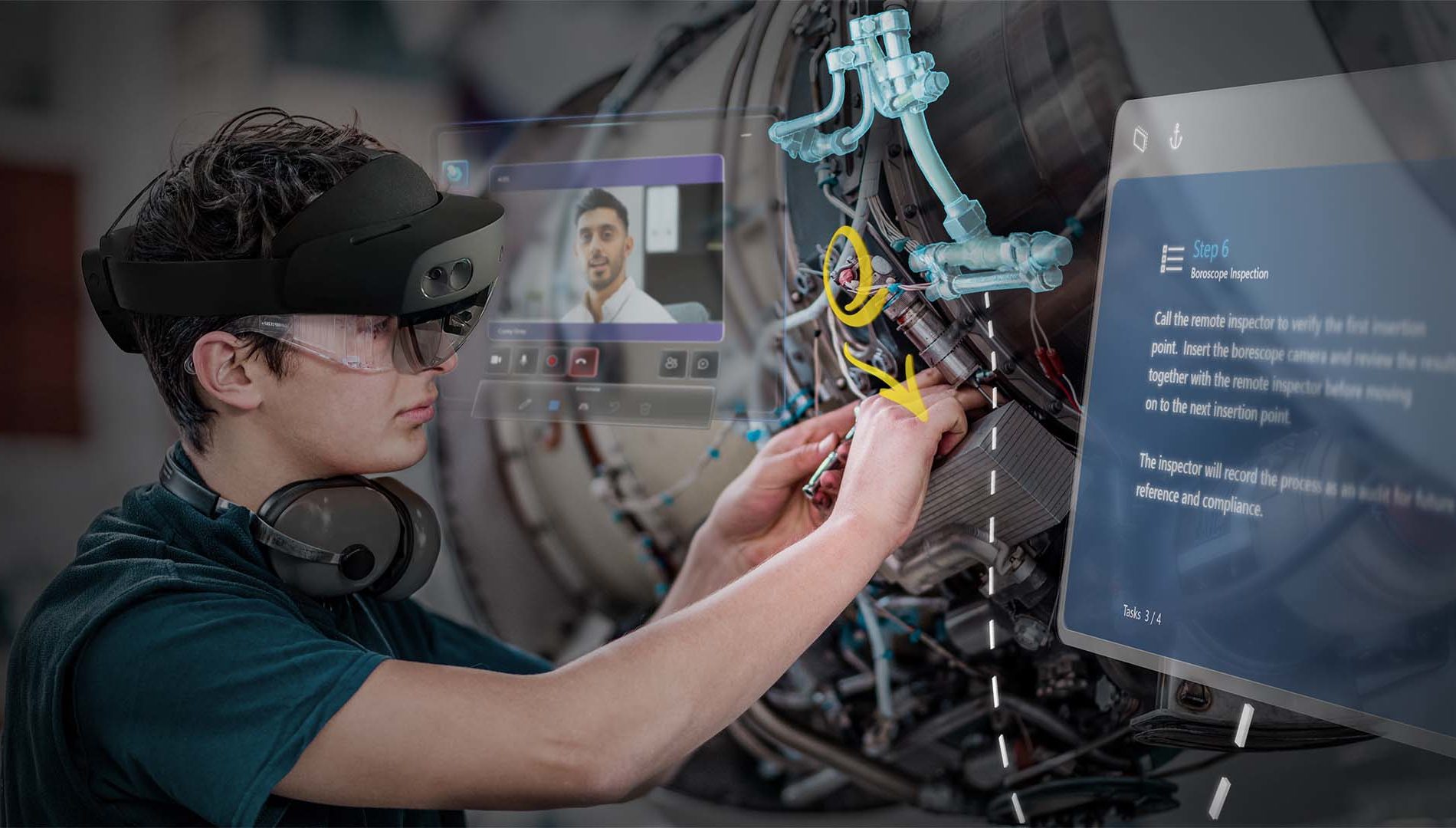
Recently, a worker at a Toyota Logistics Center in New Jersey was struggling to find that balance. So they put on a HoloLens 2, Microsoft’s mixed reality headset, opened a holographic window and called a colleague in California for help. They were instantly looking through the eyes of someone on the opposite side of the country.
Recently, a worker at a Toyota Logistics Center in New Jersey was struggling to find that balance. So they put on a HoloLens 2, Microsoft’s mixed reality headset, opened a holographic window and called a colleague in California for help. They were instantly looking through the eyes of someone on the opposite side of the country.
Here’s the trick, their coworker said: Listen for this sound. And they struck the piece at just the right angle, producing a distinct tone and a clear visual that the colleague could see and hear as if they were right next to each other.
That sound of success is now helping other Toyota workers install door edge guards. The clip was recorded on a HoloLens 2 and captured in the step-by-step holographic instructions in Microsoft Dynamics 365 Guides, giving all workers the benefit of that wisdom.
For Kleiner, that story shows how HoloLens 2 is a tool perfectly in tune with kaizen, a core Toyota principle of continuous improvement. And it explains why the device has sped out of Toyota’s innovation labs and into its everyday workplace. Workers at six U.S. Toyota Logistics Centers use HoloLens 2 for hands-free training, guidance and collaboration. The headsets will roll out soon to sites in Canada and Mexico, Kleiner said, with more expansion planned.
“The killer metric for Toyota is speed,” Kleiner said. “The faster we can train people and solve problems, the faster we can get a product to market. That’s why we want to overcome location, we want to overcome time, and we want people to move faster and share knowledge. HoloLens has enabled us to do all that.”
Over the past year, Microsoft has made significant investments in the HoloLens 2 platform in response to accelerating adoption from enterprise customers like Toyota, from new updates enabling immersive collaboration to solutions that allow companies to scale and manage a fleet of devices. They’re benefiting workers who wear the headsets across industries, whether in hospitals, semiconductor clean rooms, power plants, anatomy labs or construction sites, the company said.
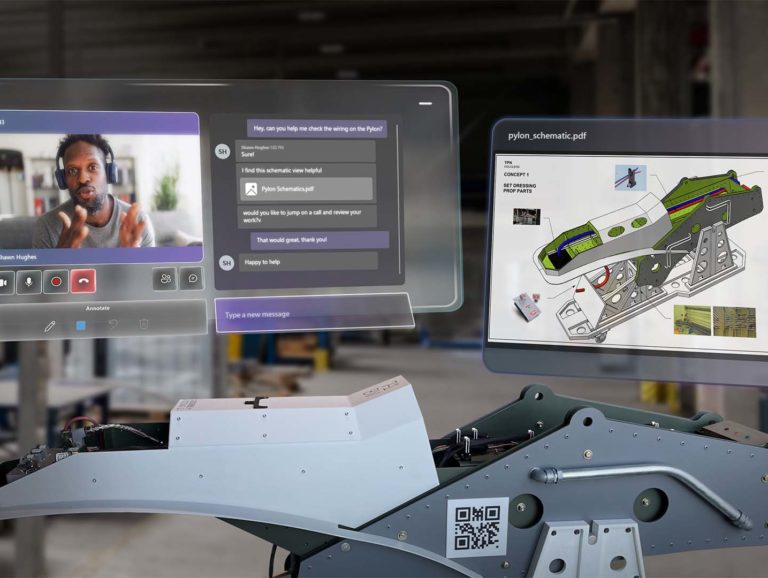
Microsoft’s latest wave of updates is combining its key Dynamics 365 Mixed Reality Apps and adding Microsoft Teams and OneDrive to existing integrations with Azure and Power Platform. As a result, Microsoft is delivering the cloud-powered productivity and collaboration tools that deskbound workers have long had at their fingertips to the frontline worker. No matter where they are, HoloLens 2 users can summon an array of holographic windows with a Teams call or chat, a Power BI dashboard, a Word document, a PDF or video, their OneDrive folder, or their calendar and operate in an immersive, 3D experience.
“We’re truly delivering Windows in mixed reality,” said Alysa Taylor, Microsoft corporate vice president for Azure and Industry.
Those capabilities help explain why businesses like Toyota have moved beyond just kicking the tires on the metaverse.
For many, that word brings to mind avatars that represent us in online worlds. It’s a partly accurate picture, Taylor said. Microsoft sees several different metaverse categories. There is the familiar consumer metaverse, where we shop and play with friends and family. And there are the commercial and industrial metaverses where we collaborate with colleagues and get work done.
The industrial metaverse that Toyota and others are exploring is a fundamentally new way for humans and AI to work together to design, build, operate and optimize their physical systems, Taylor said. With Microsoft Azure, Dynamics 365 and mixed reality offerings that bridge the digital and physical, customers can build digital twins of a factory floor or warehouse and simulate manufacturing or supply chain processes in the cloud. That allows them to refine those processes in the industrial metaverse – whether to boost operational efficiency or shrink their environmental footprint – before committing them to physical form.
Mixed reality is a key technology of Microsoft’s industrial metaverse solutions, Taylor said. HoloLens 2 delivers those solutions all the way to frontline workers who work with their hands and can’t be tethered to a computer or keyboard. Since its launch, Microsoft has incorporated customer feedback and invested in making the devices truly work on the frontlines – from longer lasting batteries to designs that fit over safety glasses to updates that make it easy for a fleet of devices to be managed by a customer’s IT department.
“Frontline workers form the backbone of many of the world’s largest industries, yet they’ve been largely underserved by technology,” Taylor said. “So much knowledge and information is in the cloud, but how does that deskless worker in the field or on the factory floor access that digital world?”
Microsoft’s answer is HoloLens 2 and its Dynamics Mixed Reality suite of apps. With Azure cloud services doing much of the heavy lifting, they can take digital information and integrate it into the user’s physical world. That holographic experience helps them learn industrial processes faster or support colleagues around the globe with expert advice as if they were in the same room, without the expense or environmental impact of long-distance travel.
“These employees don’t have desks; giving them a laptop just won’t work,” Toyota’s Kleiner said. “We want HoloLens to be our screens for our frontline workers. When they’re wearing a HoloLens, they now have a screen that gives them all the digital tools they need.”
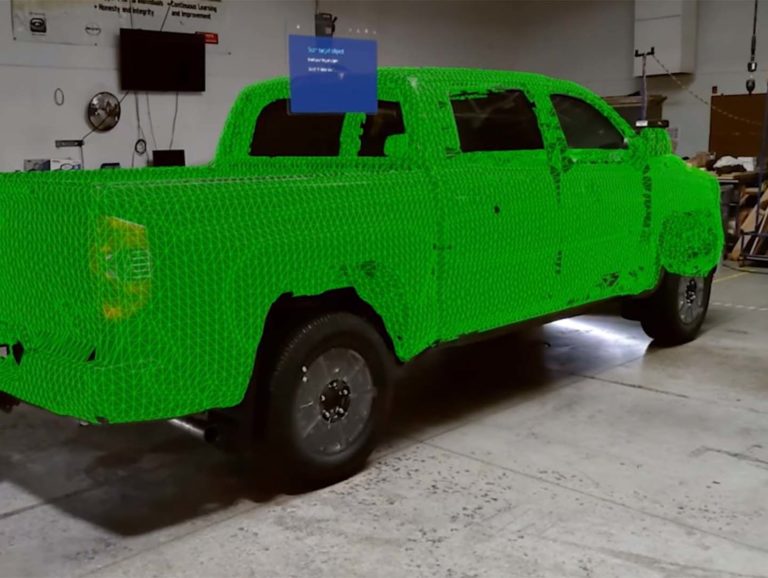
Every single one has been driven by customer feedback, said Scott Evans, Microsoft’s vice president of Mixed Reality. “Heads-up, hands-free technology enables big leaps forward in how people work,” Evans said. “But often that means going through a cycle of doing a pilot, measuring and learning, and then scaling up the deployment. We engage customers throughout that journey, and it’s a big learning process for us.”
The latest update delivers a top customer ask: bringing together Microsoft’s two key Dynamics 365 Mixed Reality apps. The first is Dynamics 365 Guides, which takes users through step-by-step holographic instructions. The second has been the most popular scenario for HoloLens 2 users: Dynamics 365 Remote Assist.
The cross-country calls about door edge guards showed the power of Remote Assist, which lets a frontline worker virtually bring collaborators into their physical space. In this “see what I see” scenario, those colleagues can be anywhere in the world, on any device. They just get a Teams call, and from there they can now annotate in 3D space and augment what that frontline worker is seeing. Combining the apps was a priority request from Toyota, which has been delivering feedback to Microsoft since the original HoloLens launched in 2016. The updated Dynamics 365 Guides delivers a much better experience, Kleiner said.