
‘A unique form of hope’: Tiny nonprofit Footprint Project is bringing cleaner energy to disaster response
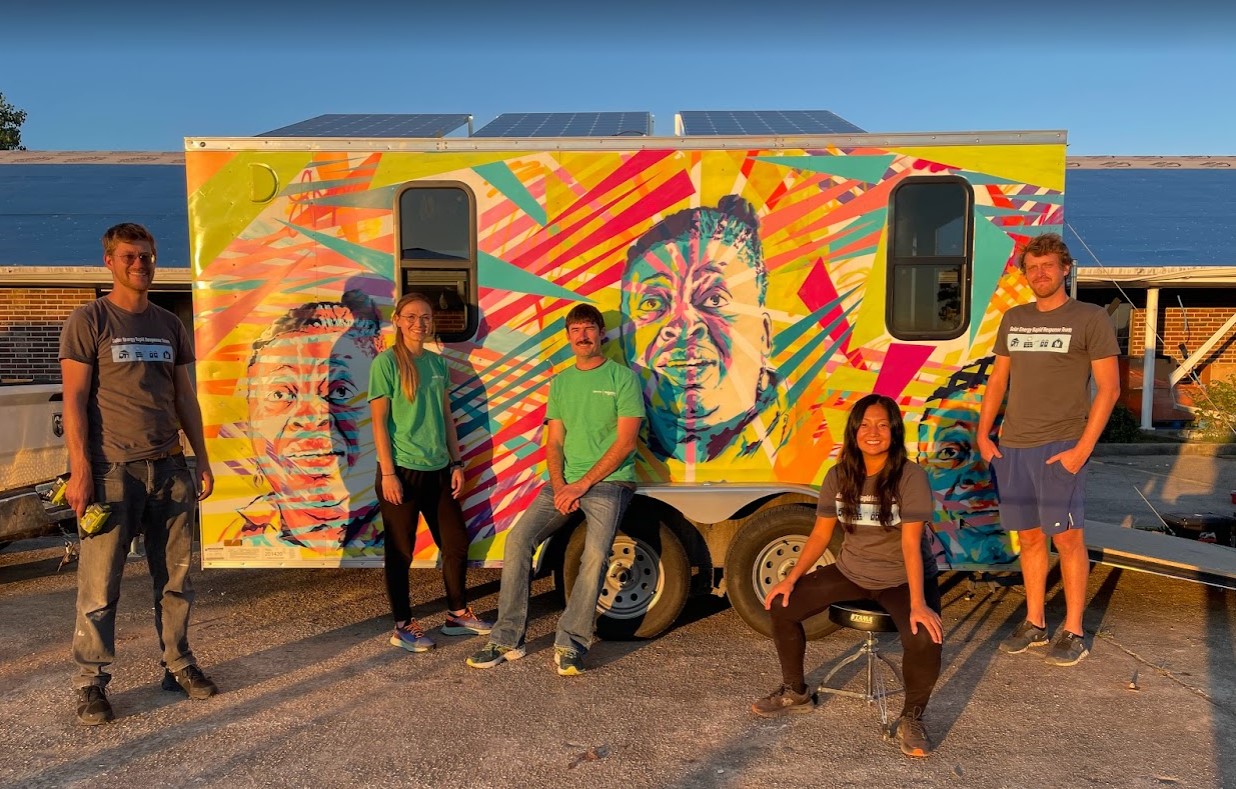
As a tornado headed their way in December 2022, Will Heegaard and Jamie Swezey crouched in the bathtub of their New Orleans home, anxiously listening to weather reports.
The storm narrowly bypassed their neighborhood near the city’s fairgrounds but barreled through several parishes in the region, causing catastrophic damage to homes and businesses.
That night, Heegaard and Swezey quickly got to work deploying solar-powered resources to the hard-hit city. Within 24 hours, their nonprofit organization, Footprint Project, had helped keep freezers cold at a local food bank, kept an electric wheelchair charged for a pastor at his home and deployed a cloud-connected solar trailer with charging stations, a Wi-Fi hotspot and a battery library so residents could take batteries home to charge their phones while the power remained out for several days.
“That really was a gamechanger,” says Asia Ognibene, an organizer with Together Louisiana, a nonprofit organization that works with Footprint Project and provided the batteries.
“Not having access to your cell phone during these power outages, regardless of how hot or cold it is out, can be very detrimental. I really believe something as simple as this portable battery library helped save lives,” Ognibene says. “People were able to stay in touch with family, keep connected, keep updated. The importance of having that communication can’t be overstated.”
Footprint Project, which Heegaard founded in 2018, is focused on providing solar energy for disaster response and helping communities rebuild with cleaner technologies. The tiny organization — which has just two full-time employees, Heegaard and Swezey — is partnering with Schneider Electric, a multinational corporation specializing in digital energy management, and Microsoft to provide solar generators and cloud-connected microgrids that can be quickly deployed to provide electricity to communities after disasters.
Footprint has provided solar-powered electricity for communications, medical services, food, water and other critical needs to communities impacted by Hurricane Ida in Louisiana, tornadoes in Kentucky and earthquakes in Puerto Rico. The organization also helped power a COVID-19 clinic at the U.S./Mexico border and coordinated shipments of solar generators and other equipment to Ukraine.
“What they do with how small they are is very impressive,” says Erin Gunning, Schneider Electric’s North America foundation and sustainability program manager.
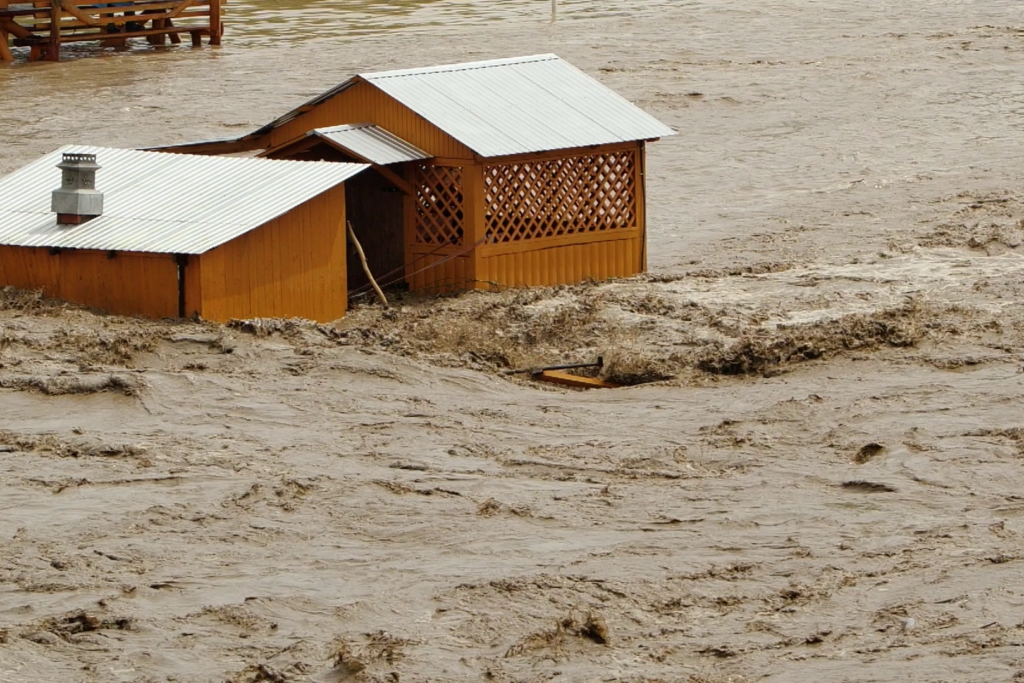
With power sometimes out for weeks after a disaster, access to electricity can be not just a matter of convenience, but survival. Lack of power can mean not being able to call 911, refrigerate insulin, keep an oxygen tank running or use an electric wheelchair.
“Oftentimes, the people who die in these emergencies die for no other reason than energy access,” Heegaard says. “We can solve that with a battery the size of a suitcase, if we know where they are.”
After Hurricane Ida pummeled Louisiana in August 2021, Pastor James Fletcher returned to Celebration Church in Laplace, about 30 miles west of New Orleans, to find the front wall of the building torn off. Fletcher could see clear through to the back of the church, which had about a foot and a half of water in it.
A pastor from one of the church’s other campuses connected Fletcher with Footprint, which quickly provided solar power for the electric tools needed to gut the church for rebuilding and for the volunteers staying in RVs and tents at the site. The deployment was part of a broader effort — Footprint’s largest to date — that brought mobile solar generators to more than 20 sites around Louisiana.
Gas stations in Laplace were out of power and closed after the storm, Fletcher says, so residents were driving as far as Mississippi and waiting in lines for hours to get gas for their generators.
“Those solar panels helped us out tremendously,” he says. “Without that, we wouldn’t have had any power and it would have really slowed us down. We’re forever grateful for the help that we received.”
Footprint was born out of Heegaard’s work on a humanitarian relief effort in Guinea almost a decade ago, when he was part of a team tasked with providing gas generators and refrigerators to five rural clinics in Guinea during the West Africa Ebola outbreak. Concerned about potential corruption with cash reimbursements for fuel purchases and the challenges for the remote clinics to consistently access fuel, the team instead bought solar panels to power the refrigerators. The initial costs were a little higher, but solar provided a convenient and greener solution.
Back home in Minnesota, Heegaard started looking at domestic disaster response and found that there was little focus on using sustainable energy. There were environmental impact experts and conferences on sustainability in humanitarian relief at the international level, he says, but in the U.S., the typical approach was using gas generators and other carbon-intensive methods to respond to disasters that were increasingly climate-related. Heegaard resolved to do something to change that.
He started buying trailer frames off Craigslist and tinkering with them in his garage with his brother, Nate, adding batteries and solar power. After Hurricane Maria devastated the eastern Caribbean in 2017, Footprint used a small grant to build a solar trailer for Puerto Rico’s emergency management agency that is being used as a back-up generator and training and remote command station on the island of Vieques. Closer to home, Heegaard and his crew began deploying solar-powered trailers and generators to communities impacted by storms in the Midwest.

“It was way easier and cheaper over the long run,” says Heegaard, who previously worked as a registered paramedic. “It was just a no-brainer. I left that mission thinking, ‘Why is that not standard practice?’”
Footprint’s first large mobilization of solar resources for disaster response was after the January 2020 earthquakes in Puerto Rico. The organization bought solar generators, set them up in shelters across the island and mobilized solar trailers and portable power units that provided critical device recharging capabilities and enabled communications.
Heegaard didn’t know it at the time, but a chance meeting later that year would change Footprint’s trajectory and set it on a path to make an even deeper impact.
In the fall of 2020, Tom Pitts was at a soccer game coaching his daughter’s team when another parent mentioned that his friend Will was staying with him and ran a nonprofit that deployed microgrids for disaster relief. The man asked if he could connect his friend with Pitts, who is Schneider Electric’s safety and environment director for North America.
Pitts was intrigued, and soon joined Heegaard and Swezey to help build a mobile solar generator that provided power for community-supported shelters in Eugene, Oregon. Impressed with Footprint’s work and mission, Pitts reached out to Gunning and other Schneider employees to see if the company could help. Gunning immediately saw Footprint as an ideal fit for Schneider Electric, which has a multiyear sustainability program and works with customers to help reduce their carbon emissions.
“We’ve been waiting for them. It was a perfect pairing of disaster relief and energy,” Gunning says. “Footprint always says, ‘Schneider Electric has been such a gamechanger for us.’ As the North America foundation manager, I feel the same way about them.”
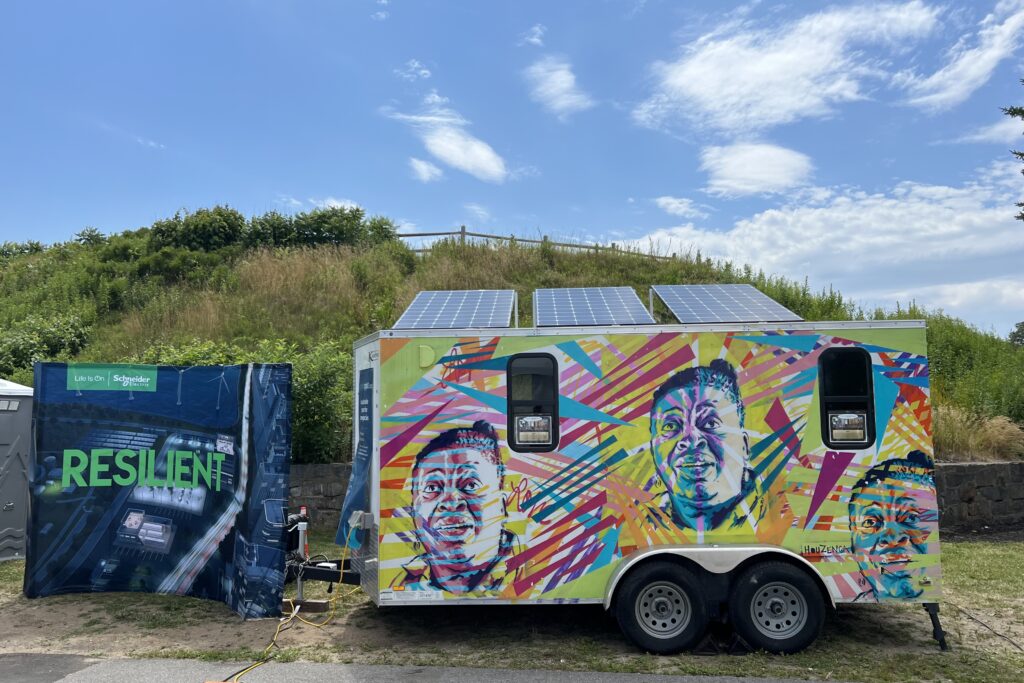
The response around the company was equally enthusiastic. Schneider Electric provided Footprint with operating grants and 500-plus inverters valued at more than $1 million that the company was no longer selling, upcycling the devices while saving them from the landfill. Schneider, a member of the Microsoft Cloud Partner Program, has helped Footprint build a cloud-connected trailer, and its employees are assisting at Footprint workshops to help build solar generators for local communities. The two organizations are now working to train a core group of Schneider volunteers who can help with both disaster deployments and community build workshops.